Bureau du COE auprès des Nations Unies, New York

Faire entendre les voix des Eglises et des organisations oecuméniques pour influencer les décisions de principe des Nations Unies.

Donate

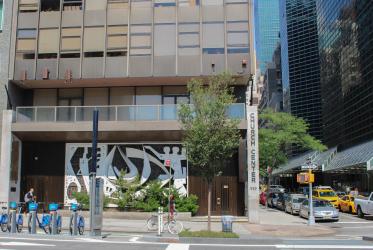
Installé au Church Center for the United Nations, l’EUNO est le centre du Conseil œcuménique des Églises pour les initiatives de plaidoyer au siège des Nations Unies à New York.

Avec l’Alliance ACT, le COE, par l’intermédiaire de l’EUNO, joue un rôle clé en initiant et facilitant des actions de plaidoyer à différents niveaux et en élaborant des stratégies œcuméniques conjointes sur des questions prioritaires.

L’EUNO est un instrument clé car il permet d’offrir une plateforme aux plus marginalisés d’entre nous, en particulier ceux de l’hémisphère sud. Ils peuvent ainsi témoigner de leurs expériences et de la vérité, afin d’influencer les politiques et la prise de décision, tant aux Nations Unies à New York que dans les États membres ou au sein d’autres institutions intergouvernementales et multilatérales. 

En engageant un dialogue continu et une coopération programmatique avec des agences telles que le Groupe de travail interinstitutions des Nations Unies sur la religion et le développement durable, le Fonds des Nations Unies pour l’enfance (UNICEF), le Fonds des Nations Unies pour la population (FNUAP) et ONU Femmes, nous visons à renforcer et promouvoir le discours et la pratique des Nations Unies sur les questions de paix et de sécurité, de développement durable et de droits de la personne. Grâce à ces partenariats dynamiques, l’EUNO fait résonner l’appel à l’action de la communauté œcuménique, en promouvant la consolidation de la paix, la réconciliation, les droits de la personne, la résistance pacifique à la violence et le développement durable.

La raison d’être de l’EUNO est d’amplifier la voix prophétique et les valeurs du mouvement œcuménique dans les divers cadres multilatéraux des Nations Unies (ONU) et en relation avec les principes communs de la charte des Nations Unies et du droit international. Notre objectif est d’influencer la politique et la prise de décision aux Nations Unies à New York, dans les États membres et au sein d’autres institutions intergouvernementales et multilatérales.

Par la collaboration œcuménique et dans l’esprit œcuménique, nous espérons pouvoir accroître la capacité de nos Églises et agences membres à défendre des causes, et être présents lors de moments décisifs où les voix du mouvement œcuménique peuvent influencer le discours mondial sur les questions les plus cruciales de justice et de paix dans le monde aujourd’hui.

Un élément essentiel de la stratégie de plaidoyer de l’EUNO est d’encourager les responsables d’Églises et les porte-parole de certaines communautés à s’engager dans la défense de causes au niveau national ainsi qu’auprès des décideurs aux Nations Unies, et de les aider à accroître leur capacité à le faire. Grâce à des relations de coopération avec les États membres de l’ONU, l’EUNO maintient ouverts les canaux de communication. Nous travaillons également à définir des synergies stratégiques au sein du mouvement œcuménique pour mettre en lien les différents acteurs et faciliter le plaidoyer collectif pour certaines causes.

L’EUNO veille à ce que le COE soit activement représenté et très influent dans les discussions sur les questions qui sont pour lui prioritaires: 

1. paix et sécurité

2. développement durable et suivi des Objectifs de développement durable (ODD)

3. religion, violence et extrémisme

4. justice de genre

5. droits des peuples autochtones.

2026

FAITH MEETS GLOBAL VALUES - CRISIS AND PROMISE OF MULTILATERALISM 

12th Symposium on the Role of Religion and Faith-Based Organizations in International Affairs 

Tuesday, 5 May 2026 - 09:00 - 13:00 EDT

Venue: Hybrid (Zoom and live streamed) with limited in-person participation (8th Floor, Church Center for the United Nations, 777 UN Plaza, New York, NY 10017) 

Simultaneous interpretation to Arabic, Chinese, English, French, Spanish will be available in the Zoom webinar 

Sponsoring organizations: ACT Alliance, Buddhist Tzu Chi Foundation, General Board of Church and Society of The United Methodist Church, International Academy for Multicultural Cooperation, Islamic Relief USA, Milstein Center for Interreligious Dialogue-Jewish Theological Seminary, Soka Gakkai International, The Lutheran World Federation, United Religions Initiative, and World Council of Churches. 

In cooperation with: United Nations Interagency Task Force on Religion and Sustainable Development and its Multi-Faith Advisory Council 

Registration: https://us02web.zoom.us/webinar/register/WN_kAs2gNy1QQ6bZuE-CQKuQQ

Image
EOUN symposium 2026

Context 

The multilateral system is navigating one of its most difficult periods since its founding. After decades of globalization and integration, the world faces accelerating fragmentation, resurgent populist nationalism, and a return of protectionism and coercive geopolitics. These shifts have shaken not only the operational capacity of international institutions but also their normative foundations, especially the legal and policy frameworks designed to protect those most at risk. As many states shift resources from official development assistance (ODA) and multilateral engagement toward (re)arming—including sharp increases in global military expenditure—humanitarian contributions remain a small fraction of such outlays even as needs grow. 

The consequences for development and human security are severe: declining ODA and widening resource gaps jeopardize delivery across peace, human rights, and sustainable development. These pressures are compounded by a UN liquidity crisis triggered by delayed or withheld assessed contributions, resulting in hiring freezes, program cuts, and borrowing from reserves. Proposals in late 2025 to shrink the 2026 program budget by about 15% and reduce staffing by roughly 19% underscore the gravity of the moment and the risk of weakening mandates just when needs are greatest—an outcome civil society has warned would be counterproductive to UN Charter obligations and system integrity. 

Crucially, civil society and nongovernmental organizations (NGOs)—including faithbased actors—are not ancillary but indispensable to effective multilateralism. Civil society widens participation, defends civic space, and connects local realities to international norms, cocreating policy and implementation with UN entities and Member States. Its rightful place is at—not near—the decisionmaking table, supported by structured, standing dialogues, fair and accessible participation pathways (including hybrid/digital access), and cocreation compacts embedded across agendasetting, drafting, and followthrough. Investing in ethical rightsbased digital cooperation and communitygenerated evidence further enables accountability and delivery, ensuring that “We, the peoples” are protagonists in global governance rather than passive beneficiaries. 

Building on a decade of Symposium dialogues—from the inaugural focus on human dignity to the human/shared security lens and the 10thanniversary recommitment to human rights—this 12th Symposium approaches UN80 with concrete guardrails and operational convergence. It advances trivantage collaboration among faithbased organizations, UN entities, and Member States so peopleand planetcentred outcomes remain at the heart of multilateral action. 

Objectives 

Against this daunting backdrop, the 12th Symposium aims to explore four key issues: 

1. Assess the state of multilateral cooperation through a shared normative lens. 

Take stock of current dynamics affecting international cooperation—especially developments touching international law, international humanitarian law, and human rights—with a view to affirming sovereign equality and preserving civic space as cornerstones of a rulesbased, inclusive multilateral order. 

2. Consider a UN “fit for purpose,” viewing UN80 as an opportunity to strengthen core mandates. 

Explore how ongoing and proposed reforms—including UN80—might enhance agility and integration while reinforcing the UN’s legal and normative commitments. Identify practical guardrails that help ensure reform efforts advance protection, participation, and accountability for all. 

3. Highlight core values and the indispensable partnership of civil society and faithbased actors. 

Explore how values—dignity, stewardship, shared responsibility—support effective cooperation, and affirm the essential role of NGOs/civil society organizations, including faithbased organizations, as cocreators in shaping and implementing solutions alongside UN entities and Member States across the policy cycle. 

4. Affirm the enabling conditions requisite for effective multilateral action. 

Demonstrate that predictable and timely financing; inclusive and principled civil society access; and sustained crosssectoral collaboration are foundational to a rulesbased multilateral system grounded in the UN Charter’s commitments to dignity and human rights, to peace and security, and to sustainable development under the rule of law, including international law. The Symposium will underscore practices that translate dialogue into demonstrable progress and mutually reinforced commitments. 

Outcomes 

1. A deepened multi-sectoral exchange and enhanced mutual understanding of the issues impacting the UN and its underpinnings of international law and commitment to multilateral cooperation. 

2. Joint/collaborative follow-up to address these issues, based on ‘TriVantage Action Notes’ (one commitment each from faith-based organizations, UN entities, and Member States, plus one joint action), generated from each session of the Symposium, to translate dialogue into measurable progress over the next 6–12 months. 

Agenda 

Opening
High-level opening followed by a fireside chat to set the tone and open the conversation for the symposium. 

Panel A - Crisis of Multilateralism
Assess the state of multilateral cooperation through a shared normative lens. 

[Break] 

Panel B - UN80: Responding to the Changing Context
Explore how ongoing and proposed reforms—including UN80—might enhance agility and integration while reinforcing the UN’s legal and normative commitments. 

[Break] 

Panel C - Faith-based concerns for people and planet
Sharing the work faith-based organizations are doing to address pressing global issues such as displacement and climate-related impacts. 

[Break] 

Closing - From Values to Action
Reflect on the outcomes from the symposium and way forward. 

Unveiling of Peace Quilt and Networking Lunch
Hosted by the General Board of Church and Society of The United Methodist Church, Suite 7C of Church Center for the United Nations.
RSVP for lunch: [email protected]

ABOUT THE SYMPOSIUM

The Annual Symposium on the Role of Religion and Faith-based Organizations in International Affairs marks a significant milestone as it celebrates its tenth edition in a distinguished series of annual gatherings that began in 2015. Faith-based partners initiated this symposium, which coincided with Martin Luther King, Jr.'s birthday that aimed at fostering dialogue on the intricate interplay between religion and international affairs. With a deliberate inclusion of UN member states and entities, the symposium sought to create a platform for collaborative policymaking and constructive engagement.

In 2016, the second symposium established a strong partnership with the UN Interagency Task Force on Religion and Sustainable Development, creating an annual policy dialogue involving UN entities, member states, faith-based actors, and civil society to address pressing global challenges. Past themes included human rights, preventing atrocities, promoting peace, addressing migration, and economic justice. The 2020 symposium was postponed, leading to a workshop for faith-based organizations. The 2021 and 2022 virtual  symposia focused on gender equality and combating systemic injustices. In 2023, the symposium emphasized human security. The upcoming 10th Symposium will reiterate commitment to human rights and dignity, fostering consensus for future events. It aims to inspire collective action for a compassionate society and aligns with the World Interfaith Harmony Week in February to promote understanding among diverse religious communities worldwide


2025

Date: April 3, 2025, 8.30 AM-13.00 PM (EST)
Format: Hybrid: Zoom and in-person (8th Floor Conference Room, Church Center for the United Nations, 777 UN Plaza, New York NY 10017)

Registration Link

Faith-based partners initiated the Annual Symposium on the Role of Religion and Faith-based Organizations in International Affairs as an annual event aiming to foster dialogue on the intricate interplay between religion and international affairs. Since 2016, the founding faith-based organizations established a strong partnership with the UN Interagency Task Force (IATF) on Religion and Sustainable Development, creating an annual policy dialogue involving UN entities, member states, faith-based actors, and civil society to address pressing global challenges.

11th Annual Symposium Theme: “The Future is Upon Us: What Now?: Amplifying the Role of Faith and Civil Society Actors in Multilateral Solutions

As global challenges such as climate change, economic inequity, violations of human rights, and global conflicts continue to grow, the inclusion of diverse voices—especially those from civil society and faith-based organizations—is critical to ensuring sustainable peace and development. However, recent years have seen a systemic reduction of space for civil society, and often the absence of any mention of faith actors as vital contributors in national and multilateral solutions and in policy formulation at both the national and international levels . 

This year’s theme will explore how civil society, particularly faith actors, can actively contribute to shaping global solutions through multilateral engagement. It will also assess how faith communities, often working at the grassroots level, can influence policy at the national and global levels to ensure sustainable development, peace, and justice.

Moreover, following the adoption of the Pact for the Future in September 2024, the year 2025 marks a significant moment in global governance and multilateral cooperation, asking us as a global community to learn from the challenges of the past while confronting the future that is now at our doorstep. Several major milestones in 2025 will provide essential contexts for the symposium’s theme and discussions, including:

  • 30th Anniversary of the Beijing Platform for Action
  • 25th Anniversary of UNSCR 1325 on Women, Peace, and Security 
  • 2025 UN Peacebuilding Architecture Review
  • 4th International Conference on Financing for Development (June 30-July 3, Seville, Spain)
  • World Summit on the Information Society (WSIS+20 Forum, July 7-11, Geneva, Switzerland)
  • UN Ocean Conference (June 9-13, Nice, France)
  • Second World Summit on Social Development (November 4-6, Doha, Qatar)

Proposed Program

The opening sessions will offer a broad framing of the challenges and opportunities facing faith-based actors in multilateral spaces. The program will then shift to specific thematic discussions examining what is needed for grassroots faith communities and organizations to contribute to global decision-making processes, promoting a localized and people-centered approach to sustainable development.

Principal sessions are envisioned as follows:

  • High-Level Welcome: The formal welcome session will feature high-level representatives both from the UN and from the faith community, and will frame the discussions to follow.

Moderators: 
Dr Nkeiruka (Kiki) Didigu (UNFPA) and Mr Peter Prove (WCC)

Speakers: 
Ms Nyaradzayi Gumbonzvanda, Deputy Executive Director, UN Women
Hon. Maina Talia, Minister for Climate Change, Tuvalu (tbc)
Nika Saeedi (UNDP)
Bishop Julius Trimble, General Secretary, General Board of Church and Society-United Methodist Church

  • Opening Session: Faith Actors and Multilateralism: Advocating for Inclusive Global Governance: This session will explore how faith-based organizations and civil society can enhance their participation in multilateral processes, advocating for inclusion in national, regional, and global governance structures. This session will assess how civil society and faith actor contributions are essential for sustainable development, peace, and human rights. It will also highlight relevant UN and faith advocacy efforts.

Moderator:
Ms Audrey Kitagawa (International Academy for Multicultural Cooperation)

Speakers: 
Mr Rio Hada, Officer for UN the High Commissioner for Human Rights, NY Office
Mr Ganoune Diop, Public Affairs and Religious Liberty, Seventh-day Adventist Church
Mr Ishaan Shah, Stolen Dreams (UK)
Ms Bani Dugal, Principal Representative of the Bahá’í International Community to the UN


  • Panel: Revitalizing commitments to the Beijing Platform for Action: As we mark the 30th anniversary of the Beijing Platform for Action and the 25th anniversary of the Women Peace and Security Agenda (UNSCR 1325), this panel will assess the link between gender equality and peace. It will explore the importance of multi stakeholder collaboration with faith actors to advance these agendas and building on the Pact for the Future look towards genuine and sustained commitments for women’s rights and security.

Moderator:
Dr Thorsten Göbel, Director of Programmes, ACT Alliance

Speakers:
Ms Leyla Sharafi, UNFPA 
Ms Ivy Koek, Soka Gakkai International 
Ms Nkechika Ibe, Founder, Impact Her World Foundation, Chair of the Women in Security Peace and Diplomacy Network (WISPAD) 
Mr Anas Badawi, The Network of Religious and Traditional Peacemakers
 

  • Panel: Building Peace in the Midst of Conflict: We live in a time of proliferating conflicts and conflict risks. In this panel, representatives of faith communities and related organizations will engage with the UN and other counterparts in reflecting on the current threats and challenges to sustainable peace, and the responses prescribed in the Pact for the Future. The panel will also address opportunities in the context of the 2025 UN peacebuilding architecture review.

Moderator: 
Elizabeta Kitanovic, Professor in Human Rights Law, Protestant Theological Faculty and Religious Studies in Brussels

Speakers:
Ms Roselyn Akombe, DPPA
Ms Sylvie Jacqueline Ndongmo, President WILPF
Ms Jenny Neme, WCC Deputy Special Envoy to Peace Process in Colombia 
Dr. Makrina Finlay, Regenerate Shingal (Iraq), URI
Mr Ahmed Shehata, CEO Islamic Relief USA


  • Panel: The AI Genie is Out of the Bottle. Can Digital Governance Catch Up?: This panel discussion will address the implications of the accelerating roll-out of Artificial Intelligence for addressing existing inequity and exclusion. It will reflect on possibilities for catching up on global governance of this new technology arising from the Global Digital Compact adopted by the Summit of the Future. The discussion will cover the ethical dimensions of Information Communication Technologies (ICTs) as agreed in the WSIS Declaration and Plan of Action which will be reviewed at the WSIS+20 High-Level Event in July 2025 in Geneva. 

Moderator:
Rev Dr Liberato Bautista, President, Conference of Non-Governmental Organizations in Consultative Relationship with the United Nations (CoNGO)

Speakers: 
Mr Tomas Lamanauskas, Deputy Secretary-General, ITU
Ms Yu Ping Chan, Head, Digital Partnerships and Engagement, UNDP 
Mr Fadi Daou, Executive Director, Globethics 
Ms Rose Payne, Lead – Policy and Advocacy, Global Partners Digital 

Concluding session
Dr Nkeiruka (Kiki) Didigu (UNFPA) and Mr Peter Prove (WCC)


Sponsoring Organizations: 
World Council of Churches, ACT Alliance, General Board of Church and Society of The United Methodist Church, Islamic Relief USA, Seventh-Day Adventist Church, Soka Gakkai International, United Religions Initiative. 

In partnership with:
Members of the UN Inter-agency Task Force on Religion and Sustainable Development  

Participant profile:
Invitations will be sent to various constituencies and networks of the collaborating symposium partners. This includes FBOs, civil society organizations, Member States and their Permanent Missions, and UN agencies through the Inter-Agency Task Force on Religion and Sustainable Development, and other supporters. 

Image
11th symposium flyer

Ms Donna Bollinger

Email: [email protected]

Address:

777, United Nations Plaza

10017 New York, New York, USA